Department of Earth System Science · UC Irvine · Est. July 2025

Climate Modelling
Group @ UCI

Led by Mark England, Assistant Professor in the Department of Earth System Science at the University of California, Irvine. We use Earth System Models to understand polar climate change and the forces driving our warming planet — from Arctic sea ice loss to the near-term climate benefits of methane mitigation.

Mark leads MethaneMIP, an international model intercomparison project quantifying the climate benefits of reducing methane emissions.

Mark England
UCI · Earth System Science · Irvine, CA
Latest
Recent News
PhD Opportunities
PhD positions available in polar climate modelling at UCI ESS, starting Fall 2026
UCI · Earth System Science · Irvine, CA
Research Themes

Understanding the
Changing Earth System

Targeted climate model experiments to isolate the role of anthropogenic forcing agents — from greenhouse gases to aerosols and ozone-depleting substances — in driving polar and global climate change.

01
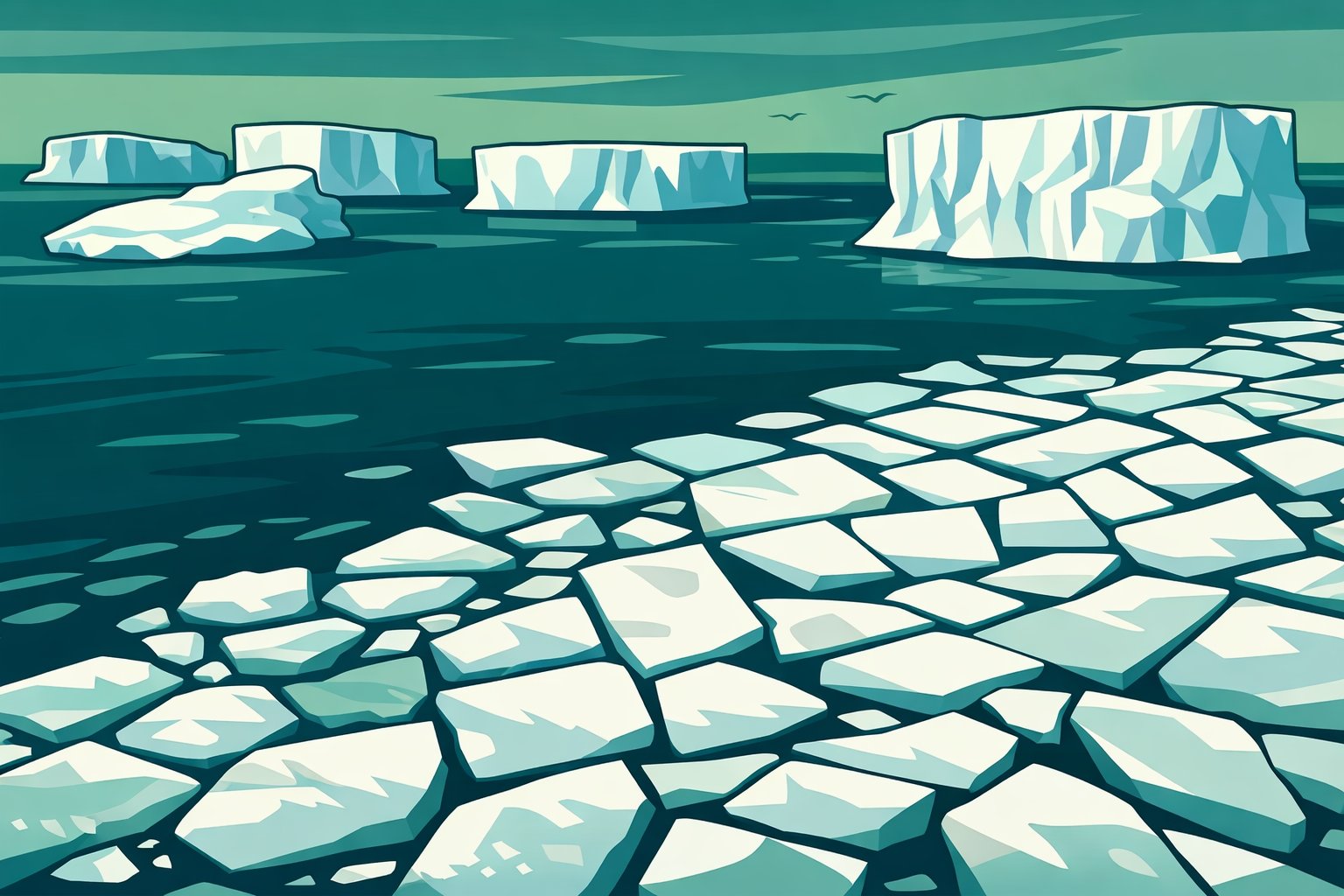
Polar Climate & Sea Ice

The polar regions are warming faster than anywhere on Earth. My work investigates Arctic Amplification, the causes of Antarctic sea ice loss, and how polar change drives weather patterns at lower latitudes. I use large ensembles of comprehensive climate model simulations to disentangle forced change from internal variability.

Arctic · Antarctic · Sea Ice · Teleconnections
Sea ice floes and icebergsSea ice floes and icebergs
02
Climate Modelling

I use targeted Earth System Model experiments to isolate the role of specific anthropogenic forcing agents — greenhouse gases, aerosols, and ozone-depleting substances — in driving observed polar and global climate change. This includes developing and applying novel model intervention methods to cleanly attribute climate responses, and running large ensembles to separate forced trends from internal variability.

Earth System Models · Attribution · Forcing · Large Ensembles
Climate model globeClimate model globe
03
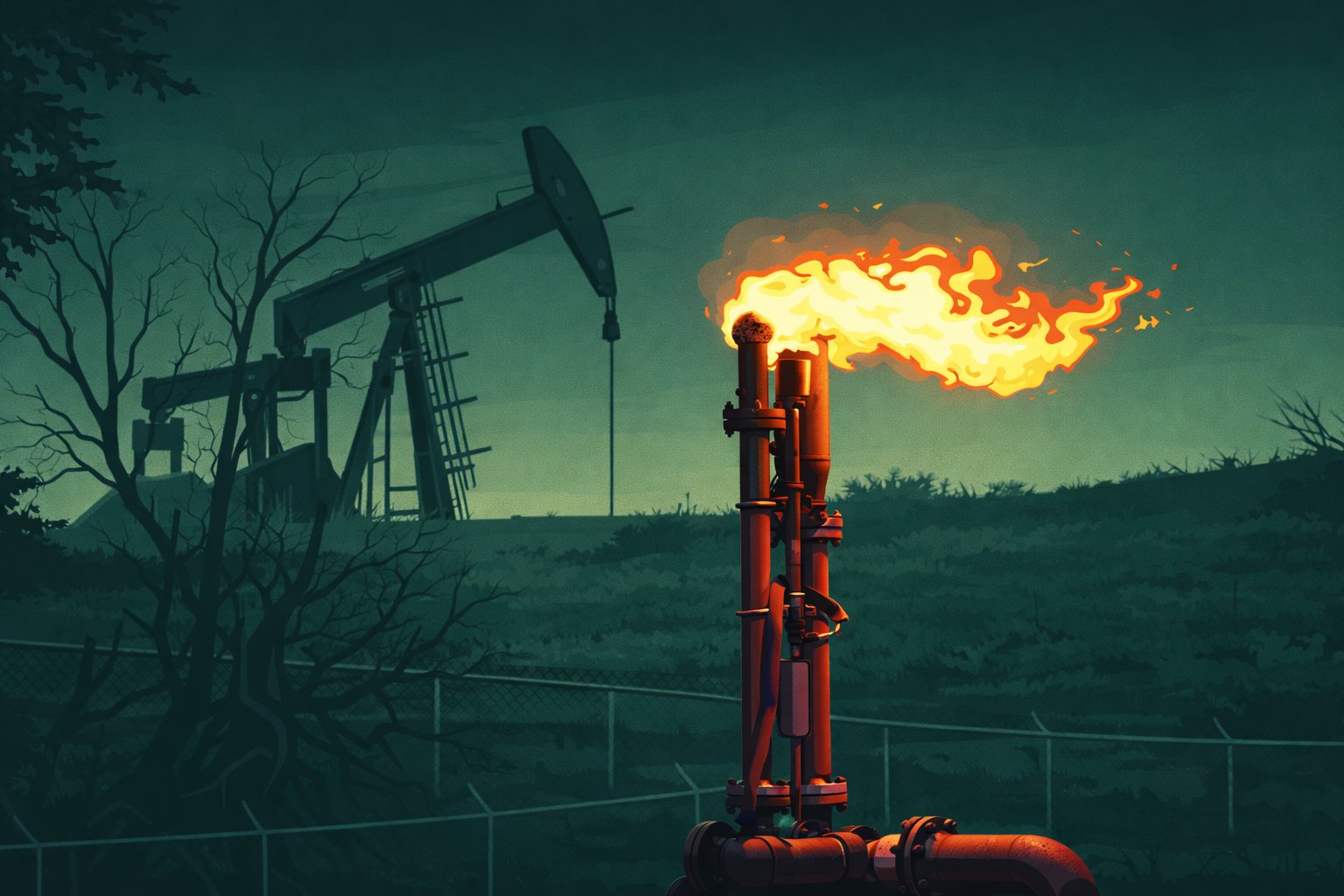
MethaneMIP

I lead MethaneMIP, an international model intercomparison project that coordinates comprehensive climate model experiments to quantify the near-term climate and air quality benefits of reducing methane emissions. Methane is a powerful short-lived climate forcer and a critical lever for near-term mitigation of warming.

Methane · Mitigation · Air Quality · Model Intercomparison
Methane flaring at oil wellMethane flaring at oil well
Peer-Reviewed Research

Publications

27+ peer-reviewed articles across Nature, PNAS, GRL, Journal of Climate, and other leading journals.

Live via ORCID  ·  0000-0003-3882-872X  ·  Google Scholar
Highlighting M. England
Loading publications…
Research Group

The England Lab

A collaborative group based in the UCI Department of Earth System Science, working at the forefront of climate modelling and polar science.

Mark England
Principal Investigator
Mark England
Assistant Professor · Earth System Science · UC Irvine · Since July 2025
PhD Students
PhD · Exeter
Anthony Chan
Doctoral Researcher · University of Exeter
Co-supervised with James Screen

Research focus: polar climate modelling and Antarctic sea ice variability.

PhD · UCI
Vassili McAnaney
Doctoral Researcher · UCI ESS

Research focus: methane mitigation and near-term climate response.

PhD · UCI
Eric Schmitt
Doctoral Researcher · UCI ESS
Co-supervised with Michael Prather

My research focuses on improving our understanding of atmospheric transport boundaries near the equator in order to better estimate chemical budgets and lifetimes, ultimately improving the representation of radiative forcing and climate feedbacks in Earth System Models. BSc Meteorology & Marine Science, University of Miami, 2025. Outside of research: rock climbing, surfing, and travel.

Undergraduate Researcher
UG
Summer Shan
Undergraduate · ESS · UCI

Contributing to ongoing group research projects in climate modelling.

Update your profile. Send your name, bio, research topic, and a headshot to [email protected] and I'll add you to the site.
Open Positions

Research Opportunities

I welcome motivated researchers passionate about climate modelling and polar science. Here's what's available at the England Lab.

PhD
Graduate Program
Prospective PhD Students
I welcome applications from prospective PhD students with a strong quantitative background. While atmospheric science and physical oceanography are natural entry points, students coming from applied mathematics, physics, computer science, or engineering with a genuine interest in climate are equally encouraged to apply — the key ingredient is strong quantitative and computational skills combined with scientific curiosity about the Earth system.

My group works primarily with CESM and other comprehensive Earth System Models, and most of our research involves large-scale data analysis and model experimentation. Familiarity with Python or a similar scientific computing language is a real advantage.
  • Review the UCI ESS graduate programme and application timeline — applications are reviewed from December 1 each year, with a final deadline of March 15
  • Email me your CV, a brief description of your research interests and background, and why you want to join the group before applying
  • Strong candidates are also encouraged to apply for graduate fellowships, including the NSF GRFP, NDSEG, NASA FINESST, and DOE CGSF
Post
Doc
Fellowships
Postdoctoral Researchers
Upcoming position: A postdoctoral researcher position investigating the decadal variability of Arctic and Antarctic sea ice will be opening in the group, funded by a new joint NERC–NSF grant. This will be advertised in the coming months — if you are interested, please feel free to get in touch ahead of the formal advertisement.
I welcome enquiries from prospective postdocs interested in polar climate, climate modelling, or methane mitigation. I am happy to support strong candidates applying for competitive independent fellowships — please get in touch early, as these require considerable lead time. Relevant opportunities include: Please send a CV and a brief description of your research interests and background when getting in touch.
UG
ESS 199 Program
UCI Undergraduate Students
I am interested in working with motivated UCI undergraduates through the ESS 199 Undergraduate Research programme. ESS 199 offers academic credit for hands-on involvement in ongoing research projects, and is a great way to get genuine experience in computational climate science before graduate school or a research career.

Because our research is almost entirely computational, quantitative and programming skills are essential. Students should be comfortable — or actively building comfort — with Python for data analysis and scientific computing. A solid grounding in mathematics (calculus, statistics) and some exposure to Earth system science are also strongly beneficial.

If you are interested, please send me an email with a brief description of your research interests and your current coursework or quantitative background. Students coming from ESS, physics, maths, or computer science who are curious about climate are all welcome to reach out.
All enquiries: [email protected]  ·  Department of Earth System Science, UC Irvine, Irvine CA 92697
Courses & Mentorship

Teaching

Teaching and mentorship are central to my work. I aim to give students both deep conceptual understanding and practical quantitative skills in climate science.

ESS 55
Undergraduate
UCI Anteater on cloudsUCI Anteater on clouds
Earth's Atmosphere

An introduction to the physical foundations of atmospheric science, focusing on how energy, motion, and water shape weather and climate. Students develop practical skills in analysing atmospheric datasets, applying order-of-magnitude estimates, diagnosing winds and circulation using force balances, and explaining climate behaviour through energy budgets. Prerequisites: MATH 2B and PHYSICS 3B/7C.

Spring 2026  ·  Tue/Thu 11:00am–12:20pm  ·  Croul Hall 3317
Curriculum Vitae

Academic Record

Download Full CV (PDF) ORCID Profile
2025 – present
Assistant Professor

Department of Earth System Science, University of California, Irvine

2023 – 2025
Senior Research Fellow

University of Exeter · Royal Commission for the Exhibition of 1851 Research Fellow

2021 – 2023
Postdoctoral Researcher

University of California Santa Cruz · PI: Nicole Feldl

2019 – 2021
Postdoctoral Researcher

Scripps Institution of Oceanography & University of North Carolina Wilmington · PIs: Ian Eisenman and Till Wagner

2019
PhD, Applied Mathematics & Atmospheric Science · Columbia University

Advisor: Lorenzo Polvani · Thesis: Understanding Observed and Projected Climate Changes in the Antarctic, and their Global Impacts

2015
MSc, Applied Mathematics & Atmospheric Science · Columbia University

Advisor: Tiffany Shaw

2013
MEng, Civil & Environmental Engineering · Imperial College London

Advisor: Maarten van Reeuwijk · Dean's List (top 10%)

2026 – 2029
NERC–NSF Pushing the Frontiers Grant

US PI · Assessing the Decadal Variability of Arctic and Antarctic Sea Ice (ADVIce) · £950,000 ($570,000 to UCI) · UK PI: James Screen, University of Exeter

2023 – 2025
Royal Commission for the Exhibition of 1851 Research Fellowship

One of eight awarded nationally · MethaneMIP · $200,000

2024
ERC Starting Grant

Rated Grade A (fully meets the ERC excellence criterion)

2017 – 2018
Boris A. Bakhmeteff Research Fellowship in Fluid Mechanics

$50,000

2025
Minimal Arctic Sea Ice Loss in the Last 20 Years, Consistent With Internal Climate Variability

England, Polvani, Screen, Chan · Geophysical Research Letters

2025
Causes and consequences of Arctic amplification elucidated by coordinated multimodel experiments

Screen et al. incl. England · Nature Communications Earth & Environment

2023
The Montreal Protocol is delaying the occurrence of the first ice-free Arctic summer

England & Polvani · PNAS

2020
Tropical climate responses to projected Arctic and Antarctic sea-ice loss

England, Polvani, Sun, Deser · Nature Geoscience

2020
Substantial twentieth-century Arctic warming caused by ozone depleting substances

Polvani, Previdi, England et al. · Nature Climate Change

View all 29 publications →
Apr 2025
Presentation to HRH The Princess Royal & the Admiral of the Fleet

Investigating the climate and health benefits of methane mitigation

Dec 2025
Hewitt Club Seminar · UC Riverside

Minimal Arctic Sea Ice Loss in the Last 20 Years, Consistent With Internal Climate Variability

Sep 2025
Climate and Atmospheric Science Seminar · Scripps Institution of Oceanography

Minimal Arctic Sea Ice Loss in the Last 20 Years, Consistent With Internal Climate Variability

Nov 2023
British Antarctic Survey · Cambridge

Investigating the causes and potential effects of the recent dramatic decline in Antarctic sea ice cover

Real-Time Climate Indicators

Climate Data

Live data from NSIDC and NOAA — two of the most critical indicators of our changing climate system. Updated automatically from public government data archives.

NSIDC Sea Ice Index v4 · G02135 NOAA GML Global CH₄ Data through Dec 2024
NSIDC Sea Ice Index · Arctic
Arctic September Sea Ice Extent
September annual minimum, millions of km² · with linear trend & 95% CI
Loading Arctic data…
Data source: NSIDC G02135 Sea Ice Index v4. September is when Arctic sea ice reaches its annual minimum. Trend of −0.81 million km² per decade; dashed line shows OLS regression with 95% confidence interval.
NSIDC Sea Ice Index · Antarctic
Antarctic Sea Ice Extent Anomaly
Monthly anomaly relative to 1979–2008 seasonal climatology, millions of km²
Loading Antarctic data…
Data source: NSIDC G02135 Sea Ice Index v4. Anomaly computed by removing the 1979–2008 monthly climatological mean. The record-low Antarctic sea ice extent from 2016 onwards is a major focus of the England Lab.
NOAA Global Monitoring Laboratory
Atmospheric Methane Concentration
Monthly global mean CH₄ (dots) with annual mean overlay (line) · parts per billion (ppb)
Loading methane data…
Data source: NOAA GML Global CH₄ Trends. Pre-industrial methane levels were ~722 ppb. Methane is the focus of the MethaneMIP initiative led by the England Lab.